Khajjiar, Himachal Pradesh
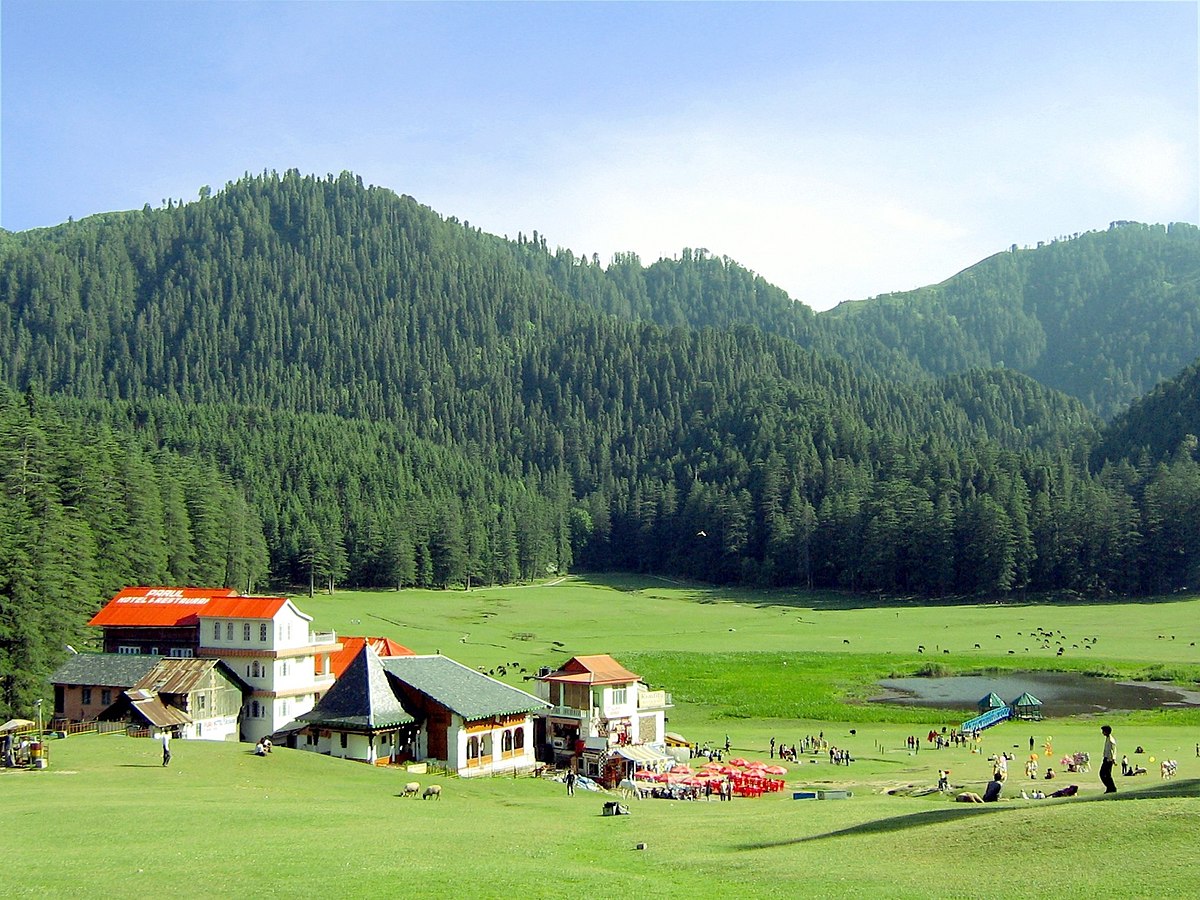
Khajjiar, commonly known as the ‘Mini Switzerland of India’, Khajjiar sits at over 1981 meters (6500 feet) and is synonymous with picturesque beauty. Khajjiar is among the 160 locations in the world that bear topographical resemblance with Switzerland. It has a rare combination of three ecosystems: lake, pasture and forest. Dense forest, swathes of green meadows and beautiful snow-capped mountain vistas, make it an ideal destination for nature lovers. Visitors can indulge and enjoy adventure activities, like zorbing, trekking, paragliding and horse-riding; the must-visit sites include the Kalatop Wildlife Sanctuary that is home to exotic flora and fauna, Khajji Naga Temple that dates back to the 12th century, and the Khajjiar Lake set at 1920 meters and encircled by hills, grasslands and deodar forests.
Khajjiar can be reached from Dalhousie, the nearest major town and hill station, by bus in an hour or so. Most tourists travel to Khajjiar by private or rented vehicles.
Valley of Flowers, Uttarakhand

Valley of Flowers is an Indian national park, located in West Rishikesh, in the state of Uttarakhand and is known for its meadows of endemic alpine flowers and the variety of flora. Nestled in the Nanda Devi Biosphere, the Valley of Flowers is the most attractive place in Uttarakhand. At 3352 to 3658 meters above sea level, the gentle landscape of the Valley of Flowers National Park complements the rugged mountain wilderness of Nanda Devi National Park to the east. Every inch of this place is blessed with unparalleled natural beauty in the form of endemic alpine flowers and diversity of flora, including medicinal herbs. It is also home to a variety of endangered species of animals, including the snow leopard, Asiatic black bear, blue sheep and musk deer, to name a few. Also, there are a host of gushing waterfalls and streams in this scenic valley. You need to trek to this beautiful valley, so be aware that July to September is the only time when trekking is allowed here.
The best time to visit Valley of Flowers depends upon your liking as the valley is for all time beautiful. If you want to see maximum number of flowers July and August is a best time, if you want to see lot of glaciers you should visit in June, to see Brahamkamal flowers at Hemkud August and September is a best time.
Getting to the Valley of Flowers requires a trek of about 17 km (10.5 mi). The nearest major town is Joshimath in Garhwal, which has convenient road connections from Haridwar and Dehradun, both about 270 km (168 mi) from Joshimath. From Delhi, one can take the train to Haridwar and then travel by bus to Govindghat via Rishikesh. Govindghat is approximately 24 km before another important destination of Badrinath. It is also possible to drive from Delhi to Govindghat, a distance of about 500 km.
Ziro, Arunachal Pradesh
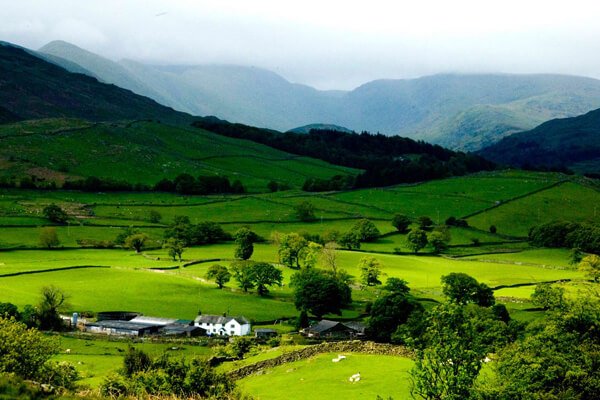
Undisturbed by modern civilization, the Ziro in north-eastern India is blessed with abundant natural beauty. Vast expanses of paddy fields, rolling green hills with abundant flora, quaint villages and its virgin beauty attract many nature lovers. Besides, this place is also a treat for adventure seekers, trekkers and wildlife explorers. Some of the must-visit attractions include Talley Valley Wildlife Sanctuary that is home to a variety of exotic flora and fauna, Kile Pakho where you can soak in the natural beauty, and Dolo Mando and Midey are trekkers’ paradise.
Ziro is around 115 km from the state capital Itanagar. It takes approx 3 and a half hours via the improved Hoj-Potin road along NH229 and 150 km via the Assam route. Earlier the nearest railway station from Ziro was located at Naharlagun in Arunachal Pradesh near the Arunachal-Assam border which is around 100 km from Ziro. Ziro is included as in India’s Tentative List for UNESCO’s World Heritage Site.
Ziro is one of the oldest towns in Arunachal Pradesh. It is located at an elevation of 1688 meters (5538 ft.) to 2438 meters (8000 ft.). Its cool weather in summer is its major attraction. It is famous for its pine-clad gentle hills around it and rice field all around.
Dzukou Valley, Nagaland
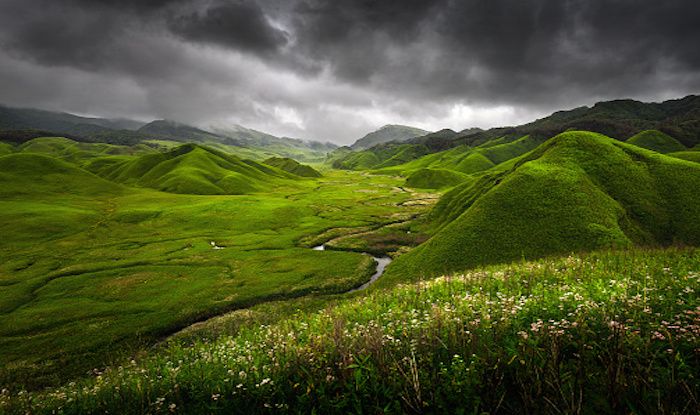
Sandwiched between north-eastern states of Manipur and Nagaland, Dzukou Valley is home to lush green forest, mosaic of grasslands, flowers of varying hues, and an abundance of flora and fauna, making it a perfect spot to spend some time in the lap of Mother Nature. The Japfu hills add to the splendour of the place and make it is a perfect spot for trekking. If you’re not up for trekking, take a stroll among the ubiquitous flowers. This valley is well known for its natural environment, seasonal flowers and flora and fauna. This is home to a variety of flowers, including the rare and unique Dzükou lily, multi-colored rhododendrons and aconitum. This valley is well known for its natural environment, seasonal flowers and flora and fauna. It is situated at an altitude of 2452 m above sea level, behind the Japfü Peak located in Nagaland.
The best time to visit is October to May. To reach the valley, you need to trek either from Zakhama village or Visvema village. The main entry is from the foothills of Viswema village where one can travel to the rest house above Mt. Teyozwü by a Tata Sumo taxi. From here one has to climb forty minutes to the top of the mountain. This is where Dzükou starts but the main valley is still another two hours walk away. One can exit the valley from the same route but if one is planning to come back by foot, the Jakhama route is shorter. Also it can be reached in five hours of trek from Mt. Isii of Senapati district of Manipur. Indian visitors need an inner line permit for Nagaland and foreign visitors must register themselves at the local state government office in Kohima or Dimapur, Nagaland.
https://theculturetrip.com/asia/india/articles/the-most-beautiful-places-for-nature-lovers-in-india/
https://en.wikipedia.org/wiki/Khajjiar
https://en.wikipedia.org/wiki/Valley_of_Flowers_National_Park
https://en.wikipedia.org/wiki/Ziro
https://en.wikipedia.org/wiki/Dz%C3%BCkou_Valley


 But if we think of OUTDOOR FITNESS we need not worry about the bad effects of the exercise we do, because most of the exercise are body weight exercises.








-1477792089_835x547.jpg)